
This post contains affiliate links. If you book a rental through one, I may earn a commission at no extra cost to you.
Short answer: Crater Rim Drive West, the road along the Kīlauea summit in Hawai‘i Volcanoes National Park, is open as of October 19, 2026, but parts of the summit are closed because of volcanic activity. Entry is $30 per private vehicle, and the park does not take cash.
Status, October 19, 2026: The park’s alerts page lists no closure of Crater Rim Drive itself. On October 7 the park closed Halema‘uma‘u Trail and part of Byron Ledge Trail because of increased earthquakes at the summit, and viewing areas on the Keanakāko‘i side of the caldera are closed. Check the alerts page the morning you go: conditions here change within days.
Crater Rim Drive is the road most visitors mean when they say they drove to the volcano. It runs from the park entrance along the Kīlauea caldera, with pullouts and short walks to the summit views. Here is what renters need to know right now.
Entrance fees
From the park’s fee page:
| Pass | Price |
|---|---|
| Private vehicle | $30 |
| Motorcycle | $25 |
| Per person (on foot or bike, 16 and older) | $15 |
| Hawai‘i Tri-Park Annual Pass | $55 |
The park is cashless, so bring a card.
What’s closed in October 2026
- Halema‘uma‘u Trail and part of Byron Ledge Trail: closed since October 7 because of summit inflation and earthquakes. USGS scientists reported new cracks on the caldera floor and say lava fountains could resume.
- Keanakāko‘i side viewing areas: closed for safety. The park notes the closest parking is about a mile from those overlooks, which makes the area hard to evacuate quickly.
- Other closures on the alerts page: Kīpukapuaulu Trail (hazard trees), Mauna Loa Road past the first cattle guard (tree removal), Sulphur Banks Bridge (the boardwalk is open), and Hilina Pali Road beyond the Maunaiki Trailhead to vehicles through November 19.
- Hōlei Sea Arch: the park’s 90-foot sea arch on the coast collapsed in late September. Stay back from the cliff edges there.
Where to park for the summit views
Kīlauea Overlook and Uēkahuna are the main stops along Crater Rim Drive West, each with its own parking. Rangers are currently leading programs at Uēkahuna, according to the park’s November events notice. Earlier in 2026 both overlooks closed for a few weeks while crews cleared volcanic cinders, so confirm they are open on the alerts page or at the Welcome Center when you arrive. If a lot is full, don’t park on the road shoulder in a closed area.
Volcanic tephra
The park warns that volcanic ash, rock and glassy strands (tephra) are on the ground at the Kīlauea summit and can irritate skin, eyes and lungs. Don’t pick it up. Closed-toe shoes and long sleeves help, and the park recommends eye protection and a dust mask.
Rather not drive to the park yourself? This small-group tour from Hilo takes 4 to 5 hours, offers pickup (including at the Hilo cruise terminal) and stops at the steam vents and the Kilauea caldera overlook. It has about 200 reviews, and 97% of travelers recommend it.
See the Volcanoes National Park tour → (affiliate link)
Plan the drive
The park is closer to Hilo than to Kona. Flying into Hilo? See Hilo airport parking. Coming from Kona, the Saddle Road guide covers the cross-island route, and how long it takes to drive around the Big Island covers the full loop. Picking up the car: the Kona Airport rental car guide.
Compare rental rates for your trip →
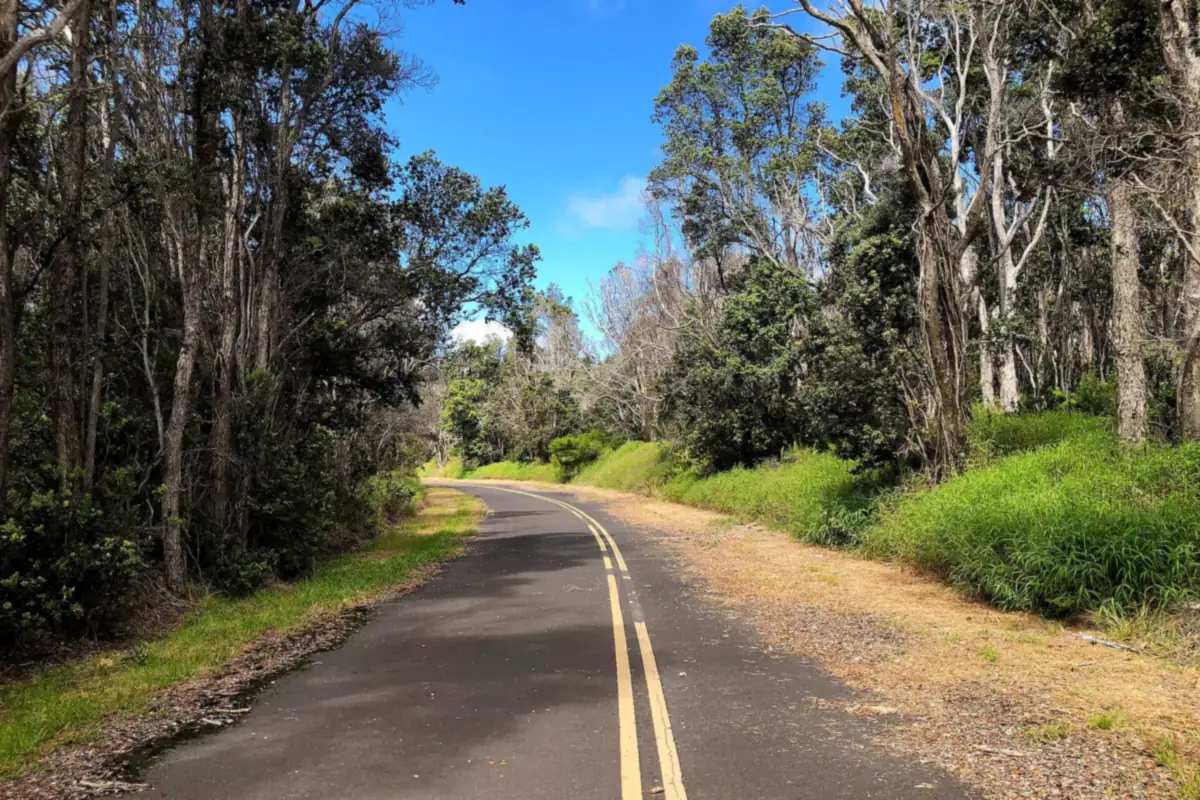
Photo: NPS (Hawai‘i Volcanoes National Park), public domain, via Wikimedia Commons.
Researched and written by Neo Pecorro. Facts on this page were checked against the National Park Service (Hawai‘i Volcanoes National Park), plus the other sources linked above. Hawaii rules change often, so confirm on the official page before you go.
Last updated: October 19, 2026.