
This post contains affiliate links. If you book a rental through one, I may earn a commission at no extra cost to you.
Short answer: The paved Road to Hana is fine in a standard rental: slow and winding, not technical. The unpaved back side past Kipahulu is what rental agreements usually forbid.
The Road to Hana is the reason a lot of people rent a car on Maui in the first place. Here is what actually matters about doing it in a rental, not just the scenery.
The paved route is fine in a normal car
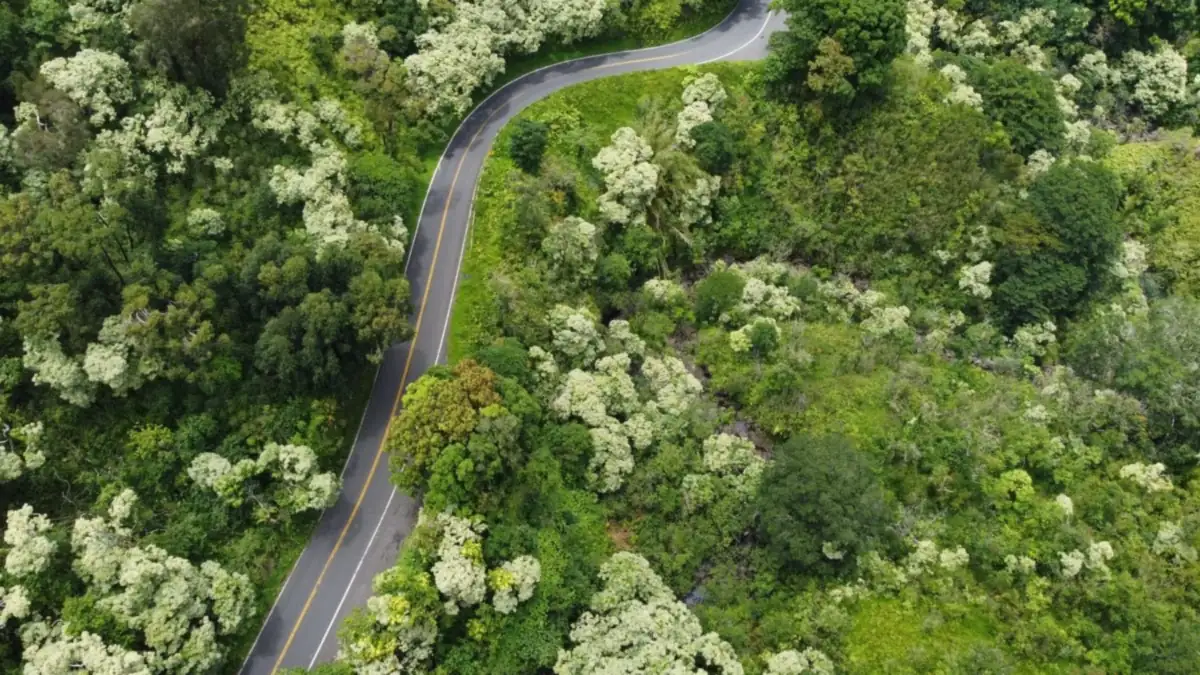
Highways 36 and 360, the actual Road to Hana, do not require 4WD or a high-clearance vehicle. A standard rental sedan or compact handles it. The road is narrow and winding with dozens of one-lane bridges, so it is slow going, not technically difficult. Budget most of a day for it, not a couple of hours.
Planning the Road to Hana? Check prices for your dates before you land.
Where rental agreements draw the line
The paved route is covered. What is not: the unpaved “back road” sections beyond Kipahulu, sometimes called the Pi’ilani Highway loop back toward Kahului. Most rental agreements explicitly prohibit driving there, and going anyway can void both your rental agreement and whatever credit card or personal insurance coverage you were relying on. This is not a minor fine-print detail. Check your specific agreement before you leave, not after something happens on that stretch.
Rather not drive the Road to Hana yourself? This small-group tour picks you up at your Maui hotel and takes 11 to 12 hours, with breakfast and lunch included. It has about 800 reviews on Viator, and 95% of travelers recommend it.
See the Road to Hana tour → (affiliate link)
What to actually check before you go
- Confirm with your specific rental company whether your agreement covers the full paved route or has its own restrictions beyond the standard unpaved-road exclusion.
- Fill up before you leave. Gas stations thin out past Paia and get more expensive the farther you go. See the guide to gas stations on Maui for where to fill up ahead of time.
- One-lane bridges mean yielding is a constant, not occasional. The general rule is uphill traffic has the right of way, but locals treat it as first-come in practice.
- Cell service drops out for long stretches. Download offline maps before you leave Kahului or Kihei.
Still deciding whether you need a rental at all for your trip? See whether you actually need a rental car on Maui: if Hana is the only reason you are considering it, the answer is almost always yes, since it is not served by public transit.
Considering the other big scenic drive too? See the Kahekili Highway guide: similar rental-agreement caveats, very different road.
Picking up at the airport first? The Kahului Airport rental car guide covers what happens between landing and getting on the road.
Check current closures before you go on Hawaii DOT’s Maui lane closures page: rockslides and construction can shut sections with little notice.
Stopping at the scenic pull-offs along the way? See the Hawaii open container law guide: drinking at a scenic lookout is specifically covered, not just driving with an open container.
Wondering how this fits into your overall Maui itinerary? See how long it takes to drive around Maui for realistic day-by-day planning.
Planning a Hana stop? Waianapanapa State Park reservations are required for non-residents, and the arrival window is tight.
Thinking about a Jeep? See Maui Jeep rental companies and what they allow.
Compare rental rates for your trip →
Photo: Jason Sherrod on Pexels.
Researched and written by Neo Pecorro. Facts on this page were checked against Hawaii DOT, plus the other sources linked above. Hawaii rules change often, so confirm on the official page before you go.
Last updated: September 7, 2026.